Franklin Biddle Academy
Fool Me OnceFranklin Biddle Academy is an old-money boarding school outside Philadelphia whose polished campus conceals the formative connection between Andrew Burkett, Joe Burkett, and Theo Mora. It becomes a crucial investigative site for Maya Stern: what first appears as a line between separate deaths resolves into a shared school, soccer team, and history of hazing, with the academy marking the beginning of the chain of events that drives the story’s later revelations.
Identity and Setting
Franklin Biddle Academy is described as an upper-crust preparatory school for boys, located just outside Philadelphia. Andrew and Joe were still high-school students there when Andrew died. Its institutional identity is conveyed through the contrast between the academy’s selectiveness and its carefully restrained appearance: the stone entrance sign is small and tasteful, and the campus is lush, orderly, and secluded. Maya arrives at the school in Bryn Mawr, Pennsylvania, passing its green quad before parking for visitors.
The main office occupies Windsor House, a stone mansion on the Main Line. A Burkett Dormitory also stands on campus, a visible reminder that the family’s name is embedded in the school’s physical landscape. The setting is not simply an affluent school with an impressive address. Maya reads its hedges, mansion, and secluded grounds as expressions of economic power: wealth can purchase fences and insulation from the world beyond them. Her description makes the academy’s privilege part of the investigation’s context, while stopping short of presenting the school itself as proof of the crimes later uncovered.
The Alumni Memorial and Maya’s Visit
Maya’s inquiry first leads her to the academy’s online alumni community. She calculates which graduating class Andrew would have belonged to and finds class pages listing homecoming events, a forthcoming reunion, and a link to the school’s capital campaign. At the bottom of the page, an In Memoriam button opens a display of two student portraits. One is Andrew Burkett. The photograph shows a young man who, Maya observes, resembles his mother more than his more handsome brother Joe.
The memorial changes the meaning of Andrew’s death for Maya by giving her an image to study where family photographs have largely been absent from her view. She had avoided looking closely at the portrait of Andrew in a distant parlor at the Burkett home, and Joe had not kept old family photographs around the house. The academy’s memorial instead presents Andrew as a student among the school’s dead, young enough to remind Maya of the young people she served with in the military. The portrait offers no answer by itself, but it makes the school’s past tangible and directs her attention toward the relationships formed there.
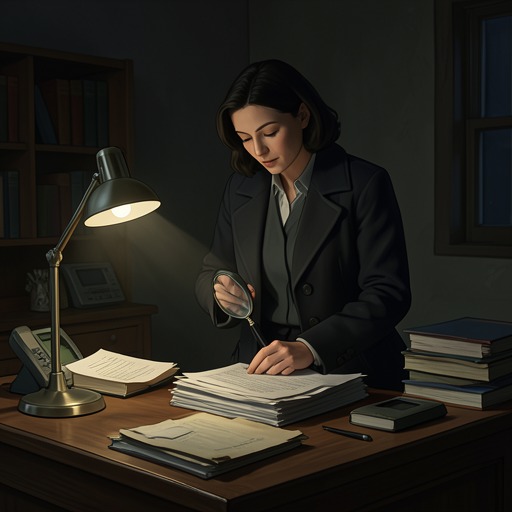
Maya subsequently drives to the academy without calling ahead. She has already decided that she will not return to her job, though she gives her colleague a partial explanation for leaving. At the school, she expects the Burkett name to help open doors and plans to speak with Headmaster Neville Lockwood IV if he is available. The visit shifts her investigation from an online record of Andrew’s life to a direct examination of the institution and people connected to his school years.
Three Deaths and a Shared Team
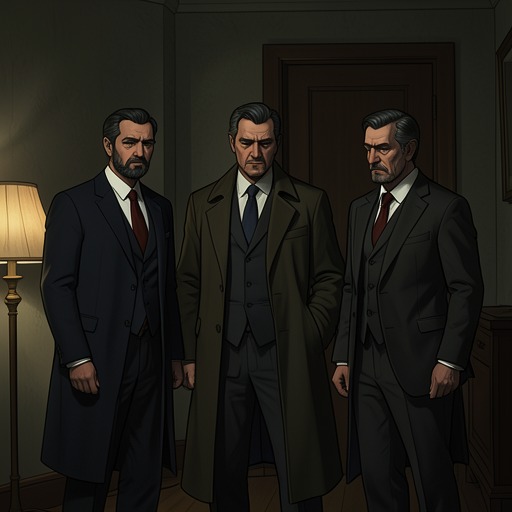
Maya raises the deaths of three members of the same school soccer team: Andrew, Joe, and Theo. The connection unsettles Neville. He initially responds by mentioning Maya’s sister, but Maya brings the conversation back to Theo Mora’s death. Neville, a former mathematics teacher, explains why he does not regard the pattern as coincidence. Two students from a small, elite boys’ school dying within months of each other would already be unlikely; their being in the same grade and on the same team makes the coincidence harder to accept. The decisive connection is that Theo and Andrew were roommates.
The statistical argument gives the school’s links a cumulative force. Each fact narrows the space for an unrelated explanation: the same academy, the same grade, the same team, and the same room shared by Andrew and Theo. Neville’s reasoning does not itself establish what happened, but it helps Maya identify the question the academy can answer. Andrew’s death had been listed as drowning after his body was found the day after he was reported missing; neither foul play nor suicide was mentioned. Against that official account, the pattern of relationships at school becomes newly significant.
Theo Mora’s Death and the Academy’s Narrative Role
The later account of Theo’s time at Franklin Biddle complicates the assumption that class difference alone explains his place among the students. Christopher Swain recalls Theo as funny, outgoing, and unwilling to defer to his wealthier classmates. The other boys liked him, and he belonged socially as well as athletically. He was not merely a scholarship student tolerated by an elite group: he was an exceptional player whose scoring gave the team a chance to win the state tournament outright, including against large public and parochial schools.
That athletic success also sharpened the tension around Joe, who played striker too. Swain describes Joe as a longtime friend whose anger could break through his outward manner. He recalls an eighth-grade assault that sent another boy to the hospital with a fractured skull, and a later science-lab fire that nearly killed a student whom Joe resented over a girl. Those memories place Joe’s violence before the deaths that bring Maya to the school, and make the academy’s history more than a background of privilege and school tradition.
Swain ultimately describes the night Theo was hazed. Joe presented it as a prank; Swain admits that he followed Joe’s lead, and says Andrew followed as well. The three went to Theo’s room, jumped him, and carried him downstairs. The scene identifies the academy as the place where the relationships among the boys became an instrument of harm: team loyalty and belonging sit beside hierarchy, intimidation, and the weakness Swain later acknowledges. Maya traces the chain of events back to the academy and Theo’s death. Franklin Biddle Academy therefore serves as more than a setting in the investigation: its memorials, dormitory, team history, and remembered hazing assemble the personal past that makes the later deaths intelligible.